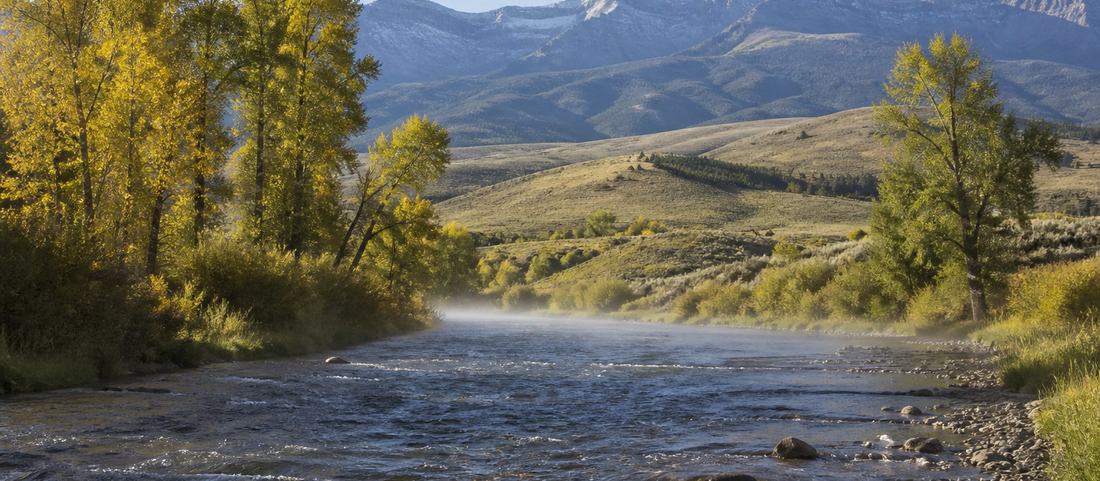
Fishing in Cody, Wyoming: the Shoshone River, the Reservoir and the North Fork
Published
- Main water
- Shoshone River
- Reservoir
- Buffalo Bill
- Upstream
- North Fork
- License
- Wyoming G&F
Water is the reason a good number of people come to Cody at all. The Shoshone River runs through the country here, and between the river, the reservoir and the North Fork there are three quite different fisheries. All three start within half an hour of town, though the North Fork then carries on west for another forty miles.
Below the dam: the tailwater
The Shoshone below Buffalo Bill Dam is not a mountain stream in the ordinary sense. It is a tailwater: the flow comes out of the reservoir instead of off the snow, which steadies both the temperature and the volume and keeps the river fishable when a free-flowing stream at the same altitude would be either frozen or in flood. From the dam it runs something like a hundred miles before it meets the Bighorn. Access is from the canyon road and from town.
That single piece of plumbing is why the water immediately west of town has a reputation out of all proportion to its size.
The reservoir
Buffalo Bill Reservoir is open stillwater at altitude, six miles west. It suits boats, and there is a state park with launching on the shore. The constraint is wind. Open water at this elevation roughens up most afternoons, and it does so predictably enough to plan around, which is why mornings are the dependable half of the day here.
The North Fork
Above the reservoir the North Fork of the Shoshone runs down Wapiti Valley beside the road to Yellowstone, with access at intervals for the whole forty-odd miles. This is river fishing in a mountain valley, and the further up you go the more it feels like it.
It is also bear country in every meaningful sense, and anyone walking a bank away from the road should be equipped and aware accordingly.
What is in the water
Brown trout are the most numerous fish through most of the river, with rainbows alongside them and cutthroat, the native species here, mixed in, plus the cuttbow hybrids that follow wherever the two overlap. Brook trout turn up in the colder feeder water. On the lower river the average fish runs somewhere around fourteen to sixteen inches, which says more about the consistency of the water than about any one season.
The season runs the other way round
The instinct is to fish in high summer, and it is the wrong instinct here. The best of the tailwater comes in the low-water months from autumn through to spring, when flows drop and the fish are concentrated and findable. Late spring runoff does the opposite: the river carries snowmelt and color, and the good water moves to the reservoir and the smaller tributaries until it clears.
Licenses and rules
Fishing here requires a Wyoming license from Wyoming Game and Fish, and the same source governs seasons, limits and any water-specific regulations. Those change, so this page does not reproduce them. The department is the authority and the only version worth relying on.
Access is the last piece and the one most easily got wrong. Much of the land along the lower river is private, and the fact that a river is public water does not make its banks public ground. The practical answer is the same as everywhere in Wyoming: use the public access points, the reservoir shoreline and the forest ground upstream, and ask before assuming anywhere else.
Waders are worth carrying even for a short session, because the productive water below the dam is reached by wading out to it, not from a bank.
Common questions
Where can you fish near Cody, Wyoming?
The Shoshone River runs through and past the town, Buffalo Bill Reservoir sits six miles west, and the North Fork continues upstream toward Yellowstone. All three are fished, and they are genuinely different waters, not three names for one.
Do you need a license to fish in Cody?
Yes. Wyoming fishing licenses are issued by Wyoming Game and Fish, and the current seasons, limits and any water-specific rules come from them, not from local custom.
Is the fishing better above or below the dam?
Below, for most visitors. The tailwater under the dam holds its temperature and flow year-round and fishes best from autumn through spring, which is exactly when the free-flowing water above the reservoir is either frozen or full of snowmelt. Go above the dam in high summer and below it the rest of the year.
What time of year is the tailwater best?
The low-water months, autumn through to spring, when flows drop and the fish are concentrated and findable. High summer is the instinct and it is the wrong one: late spring runoff puts snowmelt and color into the river, and the good water moves to the reservoir and the smaller tributaries until it clears.