The Stock Contractor Behind the Cody Nite Rodeo and What the Role Involves
Published
- Contractor
- Mo Betta Rodeo Company
- Run by
- Maury and Nikki Tate
- Based
- Apache, Oklahoma
The animals at the Cody Nite Rodeo do not belong to Cody. They belong to Mo Betta Rodeo Company, run by Maury and Nikki Tate out of Apache, Oklahoma, who hold the contract to supply the bucking string every night of the summer season and haul stock to rodeos elsewhere in the country the rest of the year.
The arrangement is normal in rodeo and almost invisible from the grandstand.
Who owns what
The contractor owns the bucking string, breeds and develops it, houses and transports it, and supplies it under contract. The animals’ condition and care are the contractor’s responsibility, and so is their quality.
The Tates run the operation out of Oklahoma, which puts them roughly a thousand miles from home for a three-month residency. That is a different proposition from hauling to a weekend rodeo and driving back. Cody performs nightly from the first of June through the end of August, gates at seven and the first ride at eight. A rodeo held once a year needs a string for one afternoon; this one needs enough animals to fill a card ninety-odd nights in a row without leaning on any single animal too often.
That constraint sets the size of the operation, and it is written into the contract, not left to the contractor’s judgment.
Nobody picks their animal
The pairing of rider and animal is not a choice made by either. In professional rodeo the draw is random and made centrally, days before the performance, so a competitor learns which bull or horse he has drawn well before he arrives and has no say in it.
That single rule is what makes the contractor’s job matter. If riders could shop for the animal most likely to flatter them, the quality of a string would be a private matter between a contractor and the competitors who liked it. Because the draw is blind, every animal in the pen has to be worth drawing, and a contractor who keeps a few good ones and a lot of filler is found out inside a season.
The stock has records of its own
Good bucking animals are named and their records followed. Professional rodeo has named a bucking horse of the year every season since 1956, and the bull equivalent is tracked just as closely inside the sport. An animal that becomes genuinely hard to ride turns into an asset that riders want to draw, because the animal’s half of the score is the only route to a high total.
Two of the bulls do a different job. Norman and Moose stand at the main entrance under the grandstands as picture bulls, and if you want a photograph with one, that is where it happens.
The working life is long and the working time is very short. A bucking animal performs for a handful of seconds at a time, a few times a month, across a career that can run a decade or more. Those economics are why careful management is the only sensible way to run a string: the animals are the business, and an injured one earns nothing for a season. Association rules cover equipment, veterinary presence and how often an animal may be used. The professional rulebook devotes more than sixty separate rules to the care and handling of animals and requires a veterinarian on site at a sanctioned performance, not on call from town. A contractor operating outside them does not keep contracts.
What the contract covers
A rodeo contracts a string for a season or a set of performances. The agreement covers how many head are supplied, how often an individual animal may be used, and the veterinary arrangements. At a venue running nightly through a summer, those terms decide whether the card can still be filled in late August at the quality it had in June.
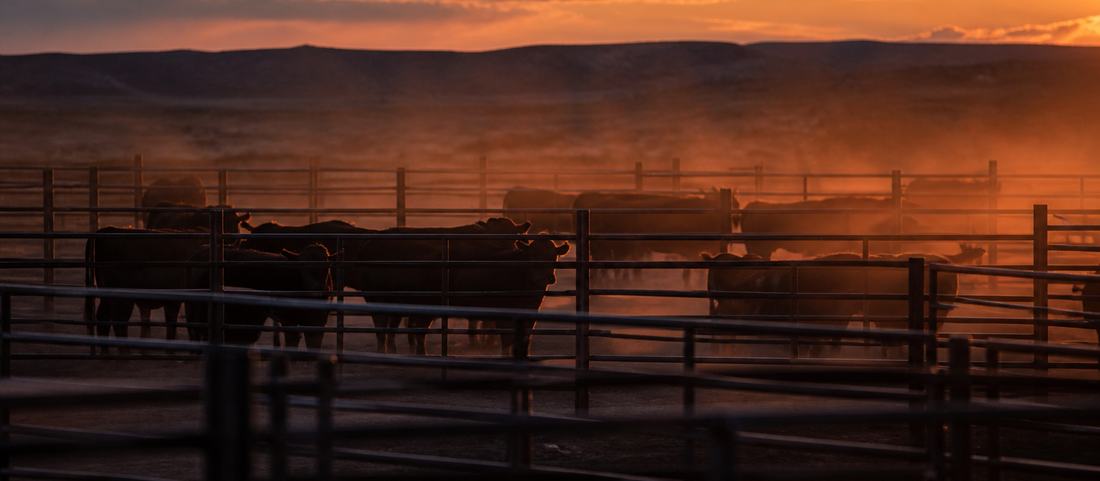
Which is why the string that arrives in Cody for the season is bigger than a weekend rodeo would ever need, and why a good deal of it spends any given evening standing in the pens off the arena, doing nothing at all.
Common questions
Who supplies the animals for the Cody Nite Rodeo?
Mo Betta Rodeo Company, run by Maury and Nikki Tate of Apache, Oklahoma. They hold the contract for the nightly summer season and haul stock to rodeos elsewhere in the country outside it.
Can visitors see the stock up close?
Two bulls, Norman and Moose, stand at the main entrance under the grandstands for photographs. The working string is in the pens off the arena and is not a petting operation.
Why should a spectator care who the contractor is?
Because the animal is scored too, and that caps what a rider can post. A weak string puts a ceiling on the whole night's competition no matter who entered, so the contractor sets the standard of the rodeo before anyone climbs onto anything.
How long does a stock contract with a rodeo run?
For a season, or for a set number of performances. The agreement covers how many head are supplied, how often a single animal may be used, and the veterinary arrangements. At a venue running nightly through a summer, those terms are what decide whether the card can still be filled in late August at the quality it had in June.